
West Virginia has one of the highest divorce rates in the country. The refined rate, measured per 1,000 married women, is about 19.3, often ranking in the top five nationally. The crude rate, per 1,000 residents, has been reported as high as 5, well above the national average. Both measures place the state firmly in the top tier for marital dissolution. Clearly, West Virginians take “till death do us part” as more of a suggestion than a rule.
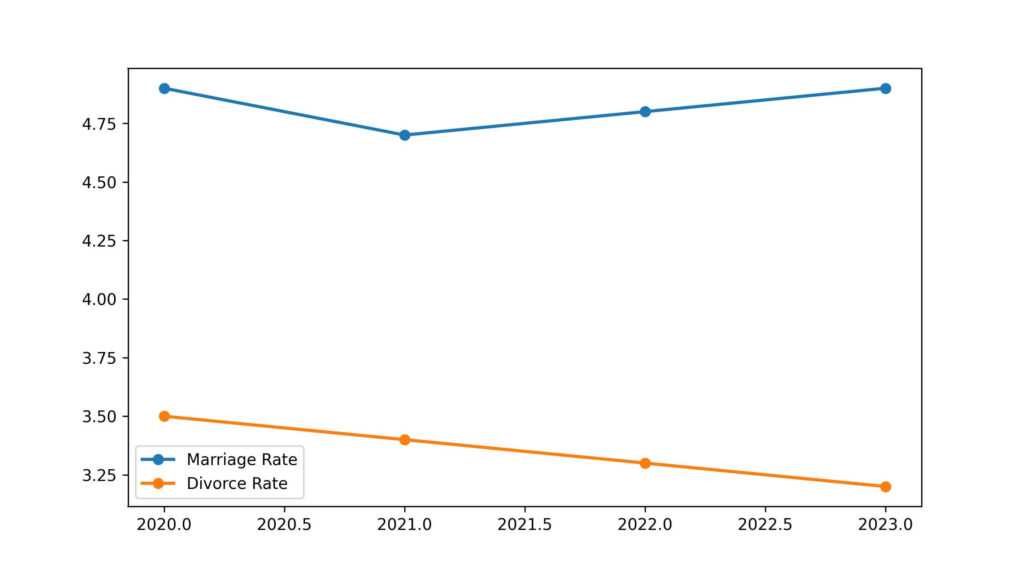
The median length of marriage in West Virginia is about 22.6 years. This includes both ongoing and ended marriages. So, West Virginians really know how to stick it out – long enough to collect a few gray hairs together.
| Age Group (Years) | U.S. Divorce Rate per 1,000 Married Women (2021) | Key West Virginia/National Trend Observations | West Virginia Overall Divorce Rate (Recent Estimates) |
|---|---|---|---|
| 15–24 | 19.7 | Highest risk rate nationally. Risk is highest for those who marry young, a factor often associated with high-rate states. | 19.33 per 1,000 married women (Refined Rate, 2022) |
| 25–34 | 16.3 | High rate, though declining for younger generations nationally. | Top 5 Ranking: West Virginia has been ranked in the top five states for its refined divorce rate |
| 35–44 | 14.9 | Marriages that last the median duration (around 8 years) often end in divorce for individuals in this age bracket. | Crude Rate Context: Historical crude rates were as high as 5.0 per 1,000 total population |
| 45–54 | 14.1 | Stable rate, slightly lower than younger groups. | |
| 55–64 | 11.8 | Part of the “Gray Divorce” trend; the rate for this older group has risen significantly since 1990. | |
| 65 and older | 5.5 | Lowest rate, but fastest-growing demographic for divorce since 1990. |
Divorce Rate in West Virginia in 2025
- High Refined Divorce Rate. West Virginia consistently ranks among the top 10–15 states for refined divorce rates, with approximately 16.9 divorces per 1,000 married women – indicating marriages here are more fragile than the national average.
- Socioeconomic Factors. Low median household income and financial stress are major contributors to divorce. Money troubles – because apparently love doesn’t pay the bills.
- Mandatory One-Year Separation (No-Fault). To obtain a no-fault divorce, spouses must live apart continuously for one year with no cohabitation.
- “In-Home” Separation May Be Allowed. Courts may accept separation under the same roof if spouses live entirely separate lives (e.g., different bedrooms, no shared meals, no intimacy). Who knew divorce could be a “sleep in separate beds” situation?
- Hybrid Grounds (Fault Still Matters). West Virginia allows both no-fault divorce (irreconcilable differences or one-year separation) and fault-based grounds, such as adultery or cruel treatment.
- Fault is Crucial for Alimony. Judges must consider fault when deciding spousal support, making it key for anyone seeking or denying alimony. Because nothing says “I love you” like proving who’s to blame.
- No Legal Separation, but “Separate Maintenance” Exists. While formal legal separation isn’t available, Separate Maintenance allows couples to resolve support, custody, and property issues without ending the marriage – useful for benefits like insurance or military coverage.
Divorce Rate in West Virginia in 2024
- Above-Average Divorce Rate. West Virginia’s crude divorce rate (per 1,000 residents) is above the national average (~2.5), indicating higher marital instability compared to neighboring states.
- Declining but High Volume. Although the divorce rate has declined over the past decade, courts still handle a substantial number of domestic relations cases. Fewer marriages, same drama – turns out divorce never goes out of style.
- Residency Requirement. At least one spouse must have lived in West Virginia for one year to file, unless they were married in the state and one spouse currently resides there.
- Dual No-Fault Grounds. Divorce is commonly granted for either irreconcilable differences or a one-year separation with no cohabitation. Apparently, all you need is a “we can’t even” certificate or a year of separate bedrooms.
- Fault Impacts Alimony. Though the state allows no-fault divorce, fault (e.g., adultery, cruel treatment, felony) must be considered when awarding spousal support.
- Fault Excluded from Property Division. Courts cannot consider marital fault when dividing property. So blame away – but don’t expect it to pay for your new couch.
- Equitable Distribution. Marital property is presumed to be divided equally (50/50), though judges may adjust for financial and non-financial contributions, like childcare.
- Mandatory Parent Education Class. Parents with minor children must complete a court-approved Parent Education Class.
Divorce Rate in West Virginia in 2023
- High Crude Divorce Rate. In 2023, West Virginia reported a crude divorce rate of ~2.9 per 1,000 residents, above the national average of ~2.5.
- National Ranking. West Virginia ranks among the highest in the U.S. for refined divorce rates, once hitting 4th highest for divorces per 1,000 married women. Apparently, winning a medal for marital breakdown is a thing.
- Economic Factors. Low income and limited employment opportunities contribute significantly to marital instability.
- Dual-Grounds Divorce System. Divorces can be granted on no-fault grounds (one-year separation) or fault grounds (adultery, cruel treatment, or desertion). One year apart or a little drama – take your pick.
- “Same-Roof” Separation Allowed. Couples may meet the one-year no-fault separation requirement while living under the same roof if they cease cohabitation entirely (separate bedrooms, no shared meals, no intimacy).
- Fault Impacts Alimony Only. Fault affects spousal support decisions but does not prevent a divorce on no-fault grounds. Blame all you want – it won’t stop the divorce, but it might lighten your wallet.
- Equitable Distribution. Marital property is divided fairly, though not necessarily 50/50, and fault is not a primary factor in the division.
- Residency Requirement. If married in West Virginia, only one spouse must reside in the state at filing. Otherwise, at least one spouse must be a resident for one year before filing.