
Virginia’s divorce rate varies depending on the measurement used. The crude divorce rate is generally around 2.5 to 3.1 divorces per 1,000 residents, with recent data placing it at 2.5. This is near or slightly above the national average. When measured among married couples specifically, the rate is about 7.9 divorces per 1,000, also slightly above average. Clearly, Virginians know how to keep statisticians busy.
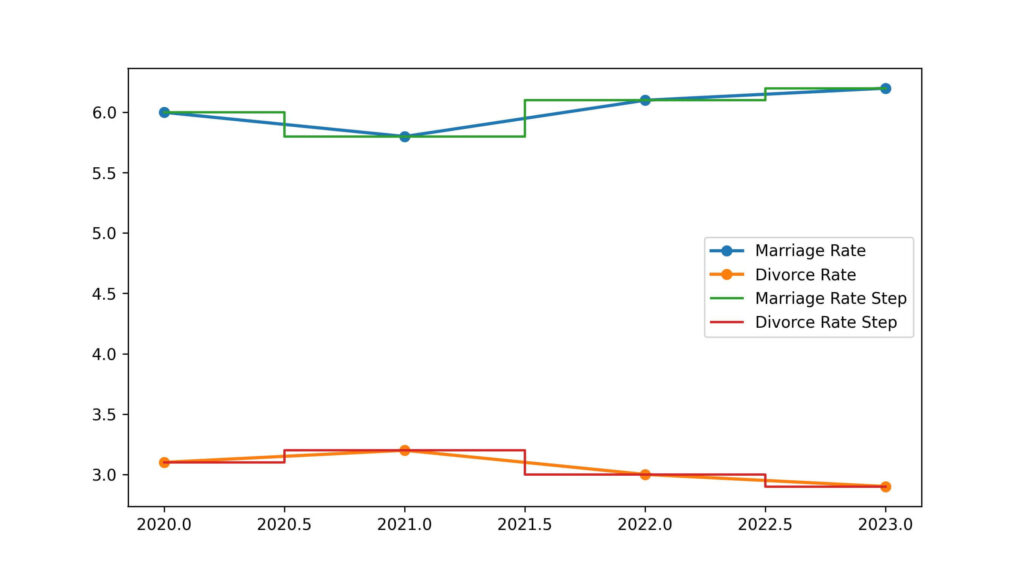
The median length of marriage in Virginia is about 17.1 years. This includes both ongoing and ended marriages. So, Virginians wrap things up a bit early – just enough time to perfect saying “we’ll see how it goes.”
| Age Group (Years) | U.S. Divorce Rate per 1,000 Married Women (2021) | Key Virginia/National Trend Observations | Virginia Overall Divorce Rate (Recent Estimates) |
|---|---|---|---|
| 15–24 | 19.7 | Highest rate nationally. Risk is highest for those who marry young. | 2.5 per 1,000 total population (Crude Rate, 2021) |
| 25–34 | 16.3 | High rate. Divorce rates have been declining for this group since the 1990s as couples marry later. | 14.0 per 1,000 married women (Refined Rate, 2021) |
| 35–44 | 14.9 | Marriages that last the median duration (around 8 years) often end in divorce for individuals in this age bracket. | Lowest Crude Rate Since 1970 (VA’s rate has steadily declined) |
| 45–54 | 14.1 | Rate is stable and lower than younger groups. | |
| 55–64 | 11.8 | Part of the “Gray Divorce” trend; the rate for this older group has more than doubled since 1990. | |
| 65 and older | 5.5 | Lowest rate, but the fastest-growing demographic for divorce since 1990. |
Divorce Rate in Virginia in 2025
- Average Crude Divorce Rate. Virginia’s crude divorce rate hovers around 2.7 divorces per 1,000 residents, placing it near the national average.
- Military Divorce Influence. The state’s significant military presence (Norfolk, Hampton Roads, Northern Virginia) contributes to higher divorce rates among military families due to deployments, relocations, and financial stress.
- Mandatory Separation Period (No-Fault)
Virginia requires a separation period before filing a no-fault divorce:- One year if minor children are involved.
- Six months if there are no minor children and a signed Separation Agreement exists.
- “In-Home” Separation Option. Courts may accept spouses remaining under the same roof if they live separately in practice—ceased marital relations, separate finances, and distinct lives.
- Fault Grounds Still Exist. Virginia recognizes fault-based grounds – adultery, felony conviction, cruelty, desertion – which can bypass the one-year separation requirement.
- Equitable Distribution (Not 50/50). Marital property is divided fairly, considering factors like marriage length, contributions, and fault. Fault may influence property division, potentially favoring the “innocent” spouse.
Divorce Rate in Virginia in 2024
- Crude Divorce Rate. Virginia’s divorce rate is about 2.7 per 1,000 residents, slightly above the national average of 2.5.
- Mandatory Separation Period for No-Fault Divorce
No general “incompatibility” ground exists. Parties must live separate and apart without cohabitation for:- One year if minor children are involved.
- Six months if no minor children and a written Separation Agreement exists.
- Military Residency Exception. Spouses (including military personnel) only need six months of Virginia residency to file, easing the process for the state’s large military population.
- Hybrid Grounds (Fault vs. No-Fault). Virginia recognizes both no-fault separation and fault-based grounds (adultery, cruelty, desertion). Filing on a fault ground allows immediate divorce, though litigation may still take time.
- Adultery and Alimony. Spouses who commit adultery, sodomy, or buggery are generally barred from receiving spousal support, giving fault serious financial consequences.
- Equitable Distribution of Property. Property and debts are divided fairly – not necessarily 50/50. Judges may consider marital fault when awarding a larger share to the “innocent” spouse.
- Types of Divorce
- Divorce from the Bond of Matrimony (Absolute Divorce): Ends the marriage completely, allowing remarriage.
- Divorce from Bed and Board (Limited Divorce/Legal Separation): Separates spouses and assets but does not end the marriage; remarriage is prohibited.
Divorce Rate in Virginia in 2023
- Above-Average Crude Divorce Rate. Virginia’s crude divorce rate ranges from 2.6 to 3.1 per 1,000 residents, consistently above the national average of 2.5.
- High Ranking for Divorce. Analyses of 2022–2023 data placed Virginia as high as 14th among U.S. states for divorce rates, indicating a relatively high level of marital dissolution.
- Mandatory Separation Period (No-Fault)
- Six months: If there are no minor children and a complete Property Settlement Agreement exists.
- One year: If minor children are involved or no full agreement is in place.
- “Same-Roof” Separation Option. Courts may allow spouses to meet the separation requirement while living under the same roof, provided they live separate lives and clearly intend to end the marriage. (Legally tricky, though.)
- Hybrid Grounds for Divorce. Virginia recognizes both no-fault separation and fault-based grounds: adultery, sodomy/buggery, felony conviction (≥1 year), cruelty, and willful desertion (≥1 year).
- Adultery and Alimony. Adultery is a powerful finding: a spouse proven guilty is generally barred from receiving alimony, even if financially needy, unless denying support would cause “manifest injustice.”
- Equitable Distribution of Property. Marital property is divided fairly – not automatically 50/50. Judges may consider fault (e.g., financial misconduct) when determining the division.
- Divorce Types
- Divorce from Bed and Board (Mensa et Thoro / Legal Separation): Addresses property, support, and custody but does not end the marriage; remarriage is prohibited. Can be filed immediately on fault grounds and later converted to a full divorce.