
South Carolina’s divorce rate is generally low to moderate compared to other U.S. states. The crude divorce rate is around 2.4 to 2.5 divorces per 1,000 residents, near or slightly below the national average. The refined rate, which accounts for married women specifically, is about 11.7 per 1,000. This places South Carolina among the states with the lowest divorce rates. Apparently, South Carolinians are either very patient or really skilled at faking happiness.
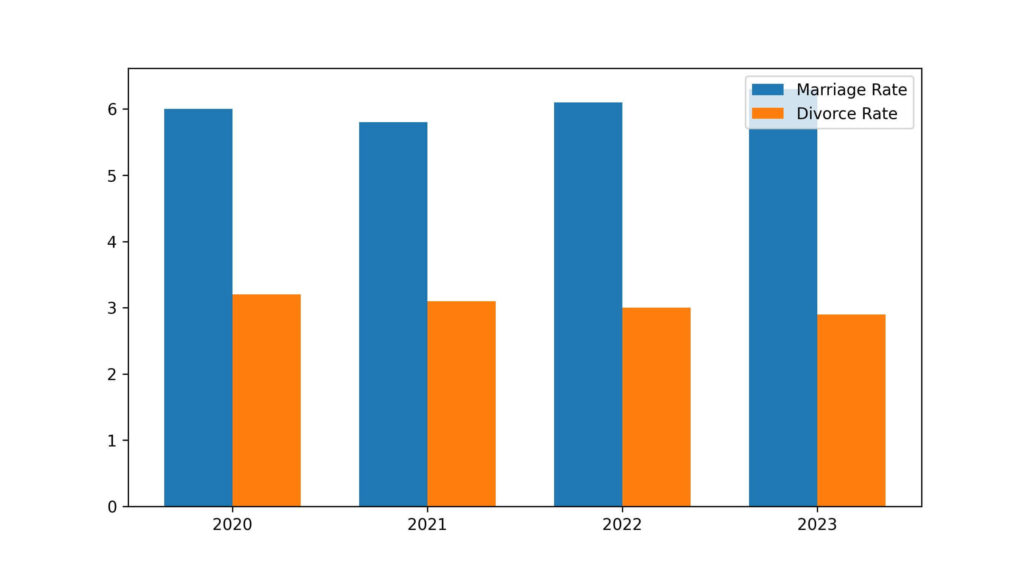
The median length of marriage in South Carolina is about 20.8 years. This includes all current marriages. So, South Carolinians stick around just long enough to celebrate a solid two decades – cheers to commitment, or at least endurance.
| Age Group (Years) | U.S. Divorce Rate per 1,000 Married Women (2021) | Key South Carolina/National Trend Observations | South Carolina Overall Divorce Rate (Recent Estimates) |
|---|---|---|---|
| 15–24 | 19.7 | Highest risk rate nationally — divorce is most likely for those who marry young. | 11.7 per 1,000 married women (Refined Rate, 2024) |
| 25–34 | 16.3 | High rate, though declining for younger generations nationally due to later marriage. | 2.4 per 1,000 total population (Crude Rate, 2021) |
| 35–44 | 14.9 | Marriages that last the median duration (8 years) often end in divorce for individuals in this age bracket. | Among the lowest rates in the U.S. |
| 45–54 | 14.1 | Stable rate, lower than younger groups. | |
| 55–64 | 11.8 | Part of the “Gray Divorce” trend; the rate for this older group has risen significantly since 1990. | |
| 65 and older | 5.5 | Lowest rate, but fastest-growing demographic for divorce since 1990. |
Divorce Rate in South Carolina in 2025
- Low Refined Divorce Rate. South Carolina consistently reports one of the lowest refined divorce rates in the U.S., indicating that married couples tend to stay together longer than in many other states.
- Mandatory “Year-and-a-Day” Separation. For a no-fault divorce, spouses must live completely separate and apart for one year and one day before filing.
- No “Same-House” Separation. Simply sleeping in different bedrooms under the same roof does not count; spouses must live in separate residences.
- Five Grounds for Divorce
South Carolina allows five grounds for divorce:- No-Fault: Continuous separation for one year.
- Fault: Adultery, physical cruelty, habitual drunkenness/narcotics abuse, or desertion for one year.
- Adultery Bars Alimony. A spouse proven to commit adultery before formal separation or filing cannot receive alimony, regardless of financial need.
- Fault Can Affect Property Division. While the state follows equitable distribution, marital misconduct may influence the division of property if it affected finances or contributed to the breakup.
- Short Final Decree Waiting Period for Fault-Based Divorces. Once a fault-based complaint is filed and proven, the divorce can be finalized relatively quickly, often in about 90 days.
- Residency Requirements
- If both spouses live in South Carolina: 3 months minimum residency.
- If only one spouse resides in the state: 1 year minimum residency.
Divorce Rate in South Carolina in 2024
- Among the Lowest Refined Divorce Rates. South Carolina reported one of the nation’s lowest refined divorce rates, tied with Montana at approximately 11.7 divorces per 1,000 married women, placing it in the bottom quartile nationally.
- Mandatory One-Year Separation for No-Fault Divorce. Couples must live physically separate for one continuous year before filing a no-fault divorce.
- No Legal Separation Status. South Carolina does not recognize legal separation; couples remain legally married during the one-year separation period.
- Four Recognized Fault Grounds
Fault-based grounds can bypass the one-year separation (except desertion):- Adultery
- Physical cruelty
- Habitual drunkenness or drug use
- Desertion for one year
- Adultery Bars Alimony. A spouse proven to commit adultery is generally permanently barred from receiving alimony.
- Dating While Separated Can Still Be Adultery. Since the parties remain legally married during the separation, dating another person without a formal legal separation or agreement can be considered adultery, affecting alimony rights.
- Equitable Distribution Standard. Property division is equitable, not necessarily 50/50. Courts may consider marital misconduct that contributed economically to the breakup when dividing assets.
Divorce Rate in South Carolina in 2023
- Above-Average Crude Divorce Rate. South Carolina’s crude divorce rate is about 2.9 per 1,000 residents, slightly above the national average of 2.5, clustering with other Southern states showing higher marital dissolution.
- Mandatory One-Year-and-a-Day Separation (No-Fault). Couples seeking a no-fault divorce must live separate and apart for a full year without cohabitation before filing for an Absolute Divorce.
- “Separate Roofs” Requirement. Separation must involve living in separate residences; simply staying in different rooms under the same roof does not qualify.
- Fault Still Matters for Alimony and Property
Marital fault can significantly impact financial outcomes:- Alimony Ban: Adultery permanently bars a spouse from receiving alimony.
- Equitable Distribution: Judges may consider fault (physical cruelty, habitual drunkenness, etc.) when dividing property, possibly resulting in unequal splits.
- Four Recognized Fault Grounds
Divorce can also be obtained immediately through these fault grounds:- Adultery
- Physical cruelty
- Habitual drunkenness or drug use
- Desertion for one year
- Faster Divorce Through Fault. Fault-based divorces bypass the one-year separation and can sometimes be finalized in as little as 90 days (though litigation usually prolongs the process).
- Corroborating Witness Required for No-Fault. A third-party witness must testify in Family Court to confirm the couple lived separate and apart for the mandatory period.