
Indiana does not consistently report its crude divorce rate to national sources like the CDC. However, other data indicate the state has a higher-than-average divorce rate. Measures such as the percentage of the population that is divorced suggest about 9.96% of residents have experienced divorce. These figures place Indiana above the national average in some analyses. Because apparently in Indiana, you’re never far from meeting someone’s ex.
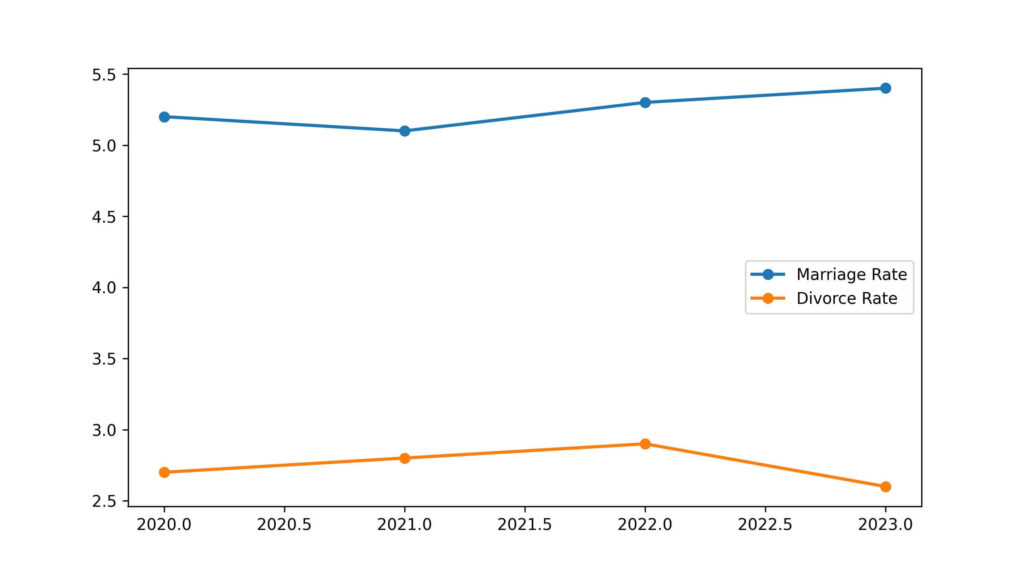
In Indiana, the median duration of intact marriages is about 18.8 years, though recent data on marriages ending in divorce is limited. This places the state slightly below the national median for marriage length. Because apparently in Indiana, couples stay together just long enough to master cornhole and county fairs.
| Age Group (Married Women) | U.S. Divorce Rate (Per 1,000) | Key Trend and Context in Indiana |
|---|---|---|
| Ages 15–24 | 17.8 | Highest Risk: Marrying at a young age is a primary risk factor, making this the highest-risk group in Indiana, consistent with national data. |
| Ages 25–34 | 17.2 | High Rate: This group often experiences divorce in the early years of marriage, driven by factors like financial strain. |
| Ages 35–44 | 14.5 | Above Average: The rate begins to decline as marriages become more established. |
| Ages 45–54 | 13.5 | Moderate Rate: Represents divorces in middle age, often concerning long-term unions. |
| Ages 50 and Older | 10.3 (Combined) | Rising Trend (“Gray Divorce”): Indiana is following the national trend where the divorce rate for those aged 50 and older has increased significantly since 1990. |
| Ages 65 and Older | 5.6 | Lowest Risk: The lowest-risk group, though the national rate for this age group has nearly tripled since 1990. |
Divorce Rate in Indiana in 2025
- Historically High Divorce Rate: Indiana consistently ranks among the states with higher crude divorce rates. Cities like Anderson and Evansville have even been nationally noted for mid-sized city divorce records.
- “Hybrid” Grounds State: Most divorces are no-fault (“irretrievable breakdown”), but Indiana also allows divorce for felony conviction, impotence at marriage, or incurable insanity lasting at least two years. Because apparently, your spouse’s crimes or medical history really do matter here.
- Mandatory 60-Day Waiting Period: Courts require a 60-day “cooling-off” period after filing before finalizing the divorce, giving couples time to reconsider or negotiate settlements.
- Two-Part Residency Requirement: To file, one must have lived in Indiana for six months and in the filing county for three months. Apparently, you can’t just pop in for a quick divorce vacation.
- Presumption of Equal Property Division: Indiana follows equitable distribution with a default 50/50 split of marital property, though courts may adjust based on circumstances. All property – even premarital – is considered potentially divisible.
- Alimony is Rehabilitative and Capped: Alimony is temporary, mainly to help a spouse gain education or work skills, usually limited to three years, or granted for incapacity or child caregiving. So yes, lifelong alimony fantasies, prepare to be disappointed.
- No Advantage to Filing First: Filing first does not confer benefits in custody, property division, or other aspects of the divorce.
Divorce Rate in Indiana in 2024
- High City Divorce Rates: Indiana cities frequently appear on top divorce lists – Anderson (#4), Evansville (#7), and Richmond (#25) ranked among the top 25 U.S. cities for divorce in 2024.
- Socioeconomic Link: Financial stress and low median family income strongly correlate with these high city-level divorce rates.
Because nothing says “true love” like checking your bank account first. - State Divorce Data is Limited: Indiana’s Department of Health does not report complete divorce data to the CDC, so statewide crude divorce rates rely on Census Bureau estimates.
- Mandatory 60-Day Waiting Period: Divorces require a 60-day cooling-off period after filing before a court can finalize the decree.
Plenty of time to rethink that decision… or not. - Mixed Divorce Grounds (No-Fault is Easier): Indiana allows both no-fault (“irretrievable breakdown”) and limited fault divorces (e.g., felony, impotence), though no-fault is overwhelmingly used.
- Equitable Property Distribution: Property is generally split 50/50 under Equitable Distribution, but courts may adjust the division based on various factors. So yes, hope for that exact half? Don’t hold your breath.
- Child Support Updates (2024): Indiana revised child support guidelines in January 2024, removing the 6% Rule for uninsured healthcare and adjusting weekly support schedules, often increasing payments for middle- and upper-income families.
Divorce Rate in Indiana in 2023
- High State Divorce Rate: Indiana was ranked sixth highest among U.S. states for divorce in 2023.
- Cities with Very High Rates: Anderson, Evansville, and Richmond were among the top 25 U.S. cities with the highest divorce rates, with over half of Anderson’s married population divorced. Because apparently, staying married in some cities is just optional.
- Financial Strain as a Key Factor: Low median household incomes in certain areas are strongly linked to higher divorce rates.
- Strict Reporting Issue: Indiana does not consistently report divorce data to the CDC, making national comparisons tricky. So yes, the government prefers to keep us guessing.
- Mandatory 60-Day Waiting Period: Couples must wait at least 60 days after filing before a divorce can be finalized.
- No-Fault is Primary: The most common ground for divorce is no-fault “irretrievable breakdown,” though fault-based grounds still exist (felony, impotence, or incurable insanity). Hope you were counting on proving fault? Better luck next life.
- Alimony Rules: Indiana rarely grants alimony, except under strict conditions like incapacity or limited rehabilitative support, usually capped at three years.