
Delaware’s crude divorce rate is about 2.6 divorces per 1,000 residents, putting it close to the national average. This measure reflects the overall frequency of divorce across the entire population. However, the refined divorce rate – which looks only at married women – can reach around 22.5 divorces per 1,000 married women, a much higher figure. This suggests that among those actually at risk, divorce is notably more common. Because apparently in Delaware, the odds of divorce just depend on which statistic you feel like believing today.
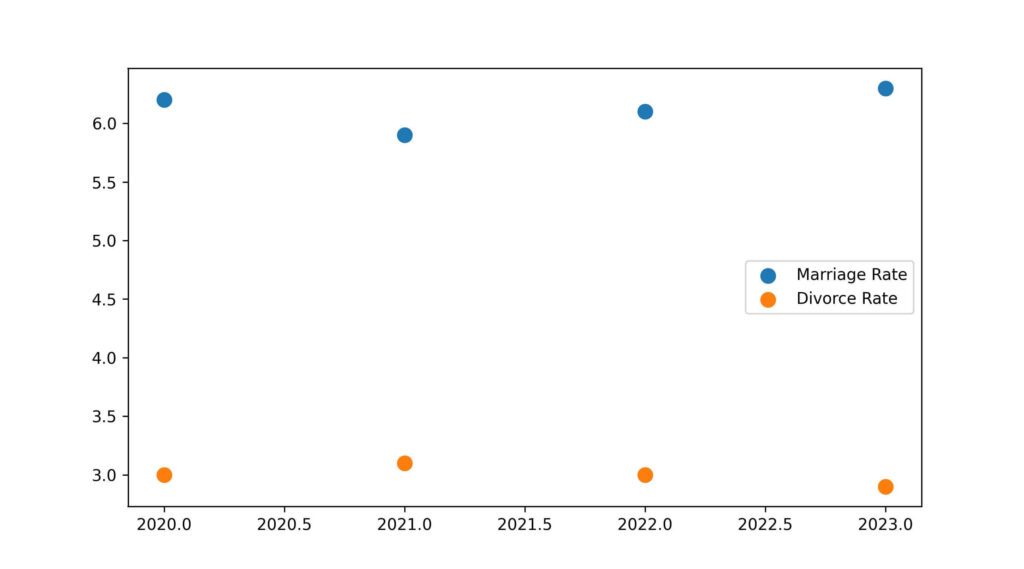
In Delaware, marriages that end in divorce have a median duration of about 8 to 9 years, based on Vital Statistics reports. This trend has remained consistent over the past decade. Because apparently in Delaware, you barely finish a decade before considering a divorce party.
| Age Metric / Group | Delaware Specific Data/Trend | Key Insight |
|---|---|---|
| Refined Divorce Rate (2023) | 22.5 divorces per 1,000 married women | This extremely high overall rate suggests that age-specific rates across the board are elevated compared to the national average. Delaware ranked second highest in the US in 2023. |
| Median Age at Divorce (2000) | 39 for Husbands / 36 for Wives | This median age is younger than the current national average, indicating a significant number of divorces occur relatively early in life. |
| Gray Divorce (Ages 50+) | Highest Rate in the US (2017) | Delaware historically had the highest gray divorce rate in the U.S., with over 13 marriages per 1,000 ending in divorce among women aged 50 and older. This trend of late-life dissolution is a significant factor. |
| Young Marriages (Early 20s) | Highest Risk | Like the rest of the country, couples marrying in their early 20s or younger face the highest statistical risk of divorce due to factors like financial instability and immaturity. |
| Most Common Duration at Divorce (2009) | Median duration: 8.4 years | This suggests that the highest concentration of divorces occurs around the 8 to 10-year mark, involving spouses generally in the 30–45 age range. |
Divorce Rate in Delaware in 2025
- Moderate Divorce Rate. Delaware’s crude divorce rate is generally moderate and sits near or slightly below the national average – similar to other Northeastern states with higher income and education levels.
- Hybrid Grounds System. Delaware is technically a no-fault state but still allows several ways to prove the marriage is “irretrievably broken,” including voluntary separation, incompatibility, or misconduct such as adultery or abuse.
- Minimum Six-Month Separation. For most no-fault divorces, spouses must live separately for at least six months before the court grants the divorce, although they’re allowed to file earlier.
- “Same-House” Separation Option. Couples can be considered legally separated even while living in the same home – as long as they use separate bedrooms and abstain from sexual relations for the six-month period.
- Specialized Family Court. All divorce, custody, support, and property issues are handled exclusively by the statewide Delaware Family Court, which focuses solely on domestic matters.
- Fault Doesn’t Affect Property Division. Misconduct (like adultery or abuse) may be alleged, but it cannot influence property division or alimony unless someone wasted marital assets.
- Low Marriage Rate. Delaware has a relatively low marriage rate (around 5.1 per 1,000 residents), which can help stabilize or reduce the long-term divorce rate.
Divorce Rate in Delaware in 2024
- Low Crude Divorce Rate. In 2024, Delaware’s crude divorce rate was about 2.6 divorces per 1,000 residents, slightly below the national rate of 2.4 and consistent with the Northeast’s generally low divorce levels.
- Paradoxically High Refined Rate. Despite its low crude rate, Delaware’s refined divorce rate in 2024 (based on 2023 data) was an unusually high 22.5 divorces per 1,000 married women, placing it among the highest in the country due to its small population and higher divorce likelihood among married couples.
- Mandatory Six-Month Separation. Most divorces require spouses to live “separate and apart” for at least six months before a judge can grant the divorce. This waiting period cannot be waived.
- “In-Home” Separation Allowed. Delaware allows couples to fulfill the separation requirement while living under the same roof – as long as they sleep in separate bedrooms and abstain from sexual relations for six months.
- No-Fault Standard With Optional Fault Claims. The only official ground is an “irretrievably broken” marriage, usually proved by the six-month separation. However, spouses may still cite misconduct (like adultery or abuse), which can influence property or alimony decisions.
- Equitable Distribution of Property. Marital assets are divided based on what the court finds fair – not automatically 50/50 – under Delaware’s equitable distribution framework.
- County-Level Differences. Data from 2024 shows some counties, such as Delaware County, reporting higher divorce rates than the statewide average, reflecting local socioeconomic differences.
Divorce Rate in Delaware in 2023
- Exceptionally High Refined Divorce Rate. In 2023, Delaware recorded the second-highest refined divorce rate in the U.S., with about 22.5 divorces per 1,000 married women, far above the national rate of 14.4.
- High Divorce Rate Despite Low Marriage Rate. Delaware also had one of the lowest marriage rates in the country (about 5.1 per 1,000 people), meaning fewer people marry – but those who do are far more likely to divorce than in most states.
- Specialized Family Court. Delaware uses a dedicated Family Court that handles only divorce, property division, alimony, custody, and related matters, offering a streamlined and specialized process.
- Six-Month Separation Requirement – Even in the Same Home. No-fault divorce requires at least six months of separation, but spouses can meet this requirement while living in the same house as long as they sleep in separate bedrooms and refrain from sexual relations.
- Ancillary Issues Decided After the Divorce. Unlike most states, Delaware often finalizes the divorce first and then resolves property division and alimony afterward through separate proceedings.
- Equitable Distribution Standard. Marital assets are divided based on what the court considers fair – not necessarily 50/50 – after weighing factors like marriage length and each spouse’s financial situation.
- Alimony Duration Rule. Alimony typically lasts half the length of the marriage, unless the marriage lasted 20+ years, in which case the duration may be indefinite.