
Alaska’s crude divorce rate is about 3.1 divorces per 1,000 residents, placing it well above the national average. When looking specifically at married women, the refined divorce rate often exceeds 24 per 1,000, one of the highest in the U.S. These high rates are influenced by Alaska’s large military population, which tends to experience more marital strain. A younger population, early marriages, and demanding industries like oil, gas, and fishing also contribute to the elevated numbers. And of course, nothing strengthens a marriage like long deployments, financial stress, and months spent on a fishing boat.
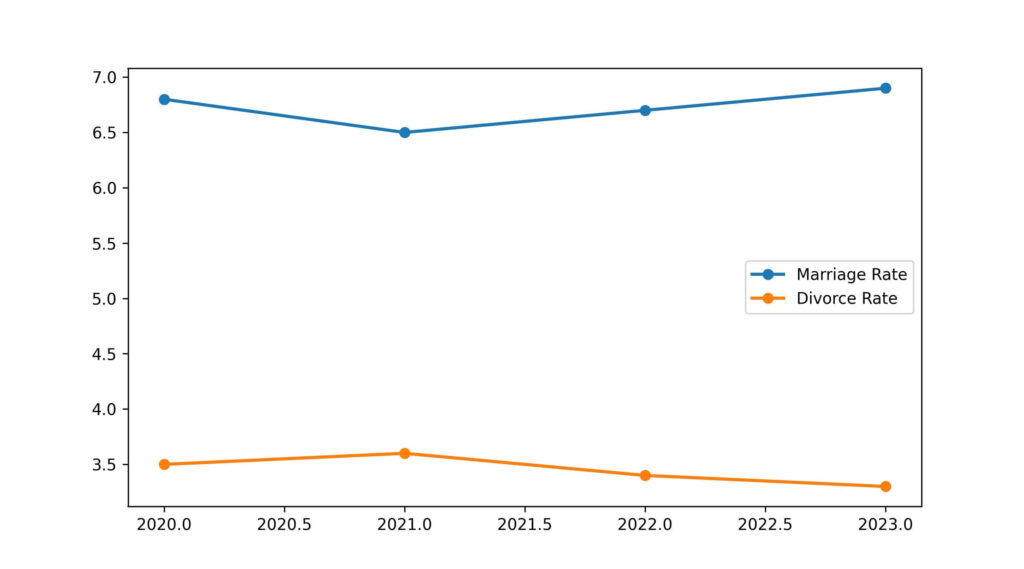
In Alaska, the average marriage that ends in divorce lasts about 16.8 to 17.7 years, among the shortest in the nation. Studies consistently place Alaska near the bottom for marriage duration, just ahead of states like Texas and Oklahoma. Because apparently in Alaska, love melts faster than the glaciers.
| Age Group | Divorce Rate (Per 1,000 Married Women) | Key Trend |
|---|---|---|
| Ages 15–24 | 35.2 | Highest Rate: Reflects the significantly higher risk associated with very young marriages. |
| Ages 25–34 | 28.7 | High Rate: Marital dissolution remains extremely high in early adulthood. |
| Ages 35–44 | 18.3 | Above Average: The rate drops substantially as marriages become more established. |
| Ages 45–54 | 12.1 | Moderate Rate: Continues the declining trend, representing divorces in middle age. |
| Ages 55–64 | 7.8 | Low Rate: Divorce stabilizes for older, working-age couples. |
| Ages 65 and Older | 3.2 | Lowest Rate: The lowest risk group for divorce, representing marriages that have endured long-term. |
Divorce Rate in Alaska in 2025
- Highest Refined Divorce Rate. Alaska consistently posts one of the nation’s highest refined divorce rates – about 24.3 divorces per 1,000 married women in 2023 – regularly topping national charts.
- Younger Marriages. Alaskans tend to marry younger than the national average, and early marriages (ages 20–25) statistically carry a higher divorce risk. Because nothing says “lifelong stability” like making major life decisions before you’re old enough to rent a car.
- High-Risk Occupations. Stress-heavy, time-away-from-home jobs dominate Alaska – oil extraction, commercial fishing, and military service – creating conditions closely associated with higher divorce rates.
- Geographic & Demographic Challenges. Remote living, a transient workforce, and demographic patterns (including high rates among Alaska Native/American Indian populations) all contribute to the state’s elevated divorce numbers. Apparently, isolation, long winters, and everyone constantly moving in and out aren’t exactly the recipe for romantic bliss.
- Income & Education Correlation. Lower income and education levels – trends seen nationwide – also correlate strongly with divorce in Alaska; individuals without a high school diploma have rates more than four times higher than those with graduate degrees.
- Regional Variation. Divorce rates differ widely across Alaska: remote, resource-dependent boroughs like the North Slope and Northwest Arctic often see higher rates, while urban centers like Juneau and Sitka tend to be lower. In other words, the farther you are from a Costco, the shakier the marriage.
- Rise in Gray Divorce. Alaska follows the national increase in divorces among adults over 50, driven by longer life spans, greater financial independence for women, and declining willingness to remain in unhappy marriages after children leave home.
Divorce Rate in Alaska in 2024
- Highest Refined Divorce Rate. Alaska consistently ranks among the highest in the nation, with a 2023–2024 refined divorce rate of about 24.3 divorces per 1,000 married women, far above the national average of roughly 14.4.
- Crude Divorce Rate Also Above Average. The crude rate – 3.1 divorces per 1,000 residents – is higher than the U.S. average of 2.5, reinforcing Alaska’s position near the top. Because when Alaska commits to being above average, it really commits.
- High Marriage Rate Increases Divorce Volume. With one of the nation’s highest marriage rates (around 20.9 marriages per 1,000 women), Alaska naturally has more marriages at risk of ending, which inflates the total divorce count.
- Younger Population, Younger Marriages. Alaska has a younger median age, and earlier marriages—especially before age 30—statistically carry a much higher likelihood of divorce. Shockingly, decisions made in your early twenties sometimes age about as well as milk in a hot car.
- Military Presence & Transient Workforce. Heavy involvement in high-stress, high-mobility sectors—military, oil, gas, and commercial fishing—adds significant strain through deployments, relocations, and long stretches away from home.
- Higher Divorce Rates in Low-Income Households. Divorce is most common among households earning under $25,000, far exceeding rates seen among those earning over $150,000. Turns out financial stress doesn’t exactly inspire “’til death do us part” energy.
- Straightforward No-Fault Divorce System. Alaska’s pure no-fault laws allow any marriage to be dissolved simply by declaring it “irreconcilable,” making the legal process simple and accessible.
Divorce Rate in Alaska in 2023
- Nation’s Highest Refined Divorce Rate. In 2023, Alaska recorded the highest refined divorce rate in the U.S. – about 24.3 divorces per 1,000 married women, far above the national average of 14.4.
- High Marriage Rate Boosts Divorce Volume. With one of the country’s highest marriage rates (about 20.9 marriages per 1,000 women), Alaska naturally ends up with more marriages at risk of ending. Because the more people tie the knot, the more opportunities there are to untie it – simple math, really.
- Younger Population, Earlier Marriages. Alaska’s relatively young median age (about 36.1) means more early marriages, which statistically have higher divorce risk.
- Economic & Employment Strain. Industries like oil, gas, commercial fishing, and the military bring stress, long separations, and financial instability – all major contributors to marital breakdown. Nothing strengthens a relationship like months apart and unpredictable paychecks.
- No Fixed Residency Time Requirement. To file for divorce, a person only needs to be physically present in Alaska with the intent to stay- no minimum duration required.
- Mandatory 30-Day Waiting Period. Even uncontested divorces require a minimum 30-day wait after filing before a judge can issue the final decree.Because nothing says “quick breakup” like being forced to sit and think about it for a month.
- Fault Grounds Still Exist. While most cases are filed as no-fault (“irreconcilable differences”), Alaska still recognizes fault grounds such as adultery or willful desertion.
- Equitable Distribution with an Invasion Clause. Alaska divides marital property based on fairness and may even divide separate, pre-marital property when necessary to achieve an equitable outcome.