
North Carolina’s divorce rate is slightly above the national average. The crude divorce rate ranges from about 2.7 to 3.2 divorces per 1,000 residents. This places the state in the middle-to-upper-middle tier nationally. Although the rate is above average, it has been gradually declining over time. So, in North Carolina, marriages are breaking up less often – progress, I guess.
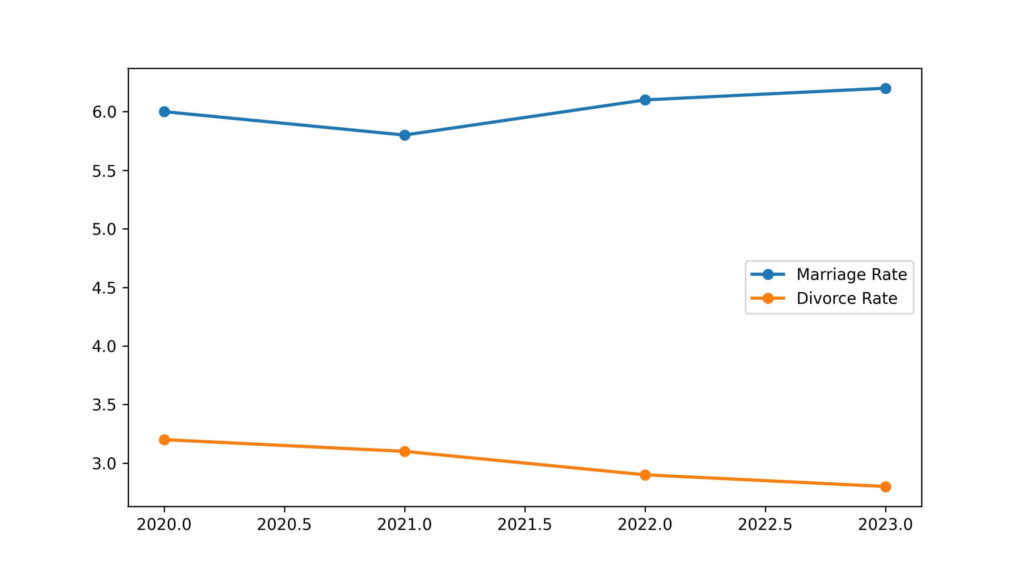
In North Carolina, the median length of intact marriages is about 19.5 years. This reflects only marriages that are still ongoing. So, couples here can enjoy nearly two decades before considering whether “till death do us part” needs a manual update.
| Age Group (Years) | U.S. Divorce Rate per 1,000 Married Women (2021) | Key North Carolina/National Trend Observations | North Carolina Overall Divorce Rate (Recent Estimates) |
|---|---|---|---|
| 15-24 | 19.7 | Highest Rate. Couples marrying before age 25 in NC almost double their odds of divorce compared to those who wait until after 30. | 2.7 per 1,000 total population (Crude Rate, 2023) |
| 25-34 | 16.3 | High divorce rates are often attributed to financial/career stress and low age at first marriage. | 14.5 per 1,000 married women (Refined Rate, 2015 estimate) |
| 35-44 | 14.9 | Marriages that last the median duration (8 years) often end in divorce for individuals in this age bracket. | |
| 45-54 | 14.1 | Middle-aged adults (ages 40-54) often experience higher divorce rates than younger couples in the state. | |
| 55 and older | 9.3 (Combined 55+ rate) | Gray Divorce Trend: Rates for those 50 and older have more than doubled since 1990. |
Divorce Rate in North Carolina in 2025
- Slightly Higher than the National Average: North Carolina’s crude divorce rate is slightly above the national average, estimated between 2.7–3.4 per 1,000 residents (national rate ~2.4).
- Mandatory “Year-and-a-Day” Separation: Spouses must live separate and apart for at least one year and one day before filing for absolute divorce.
- No “Same-House” Separation: Simply sleeping in separate bedrooms under the same roof does not count; separate residences are required.
- Pure No-Fault Divorce: Divorce is granted solely based on the one-year separation and residency requirements, without alleging fault.
- Fault Matters for Financials: While fault doesn’t affect the divorce itself, proven marital misconduct can impact alimony awards.
- Equitable Distribution: Marital assets and debts are divided fairly, though not necessarily 50/50, under the state’s equitable distribution rules.
- Rural vs. Urban Disparity: Divorce rates tend to be higher in rural counties and military-heavy areas than in urban centers like Wake or Mecklenburg.
- Declining Rates: North Carolina’s divorce rate has steadily fallen from a 1990s peak of ~5.1 per 1,000, likely due to later marriages and higher education.
Divorce Rate in North Carolina in 2024
- Above-Average Divorce Rate: The crude divorce rate is around 2.7–3.4 per 1,000 residents, slightly above the national rate of ~2.4–2.5.
- Mandatory One-Year Separation: Couples must live separate and apart for a full year and one day before filing for an absolute divorce.
- Separate Residences Required: The one-year separation must include living in different homes, with at least one spouse intending the separation to be permanent.
- Fault Still Impacts Alimony: While divorce itself is no-fault, marital misconduct – like adultery – can bar a dependent spouse from receiving alimony.
- Civil Torts Still Possible (Proposed Abolition in 2024): North Carolina retains uncommon civil actions such as Alienation of Affection and Criminal Conversation, though legislation has repeatedly tried to abolish them.
- Equitable Distribution Presumed Equal: Marital property is presumed to be split 50/50, but courts can adjust the division if this is deemed unfair.
- Local Variation in Divorce Rates: Counties with higher financial stress or large military populations, like Onslow and Cumberland, show higher divorce rates than more affluent areas.
- Separate Property Date Matters: Property or debt acquired after the legal separation date is considered separate and not subject to division.
Divorce Rate in North Carolina in 2023
- Above-Average Divorce Rate: The crude divorce rate is estimated between 2.7–3.4 per 1,000 residents, above the national average of ~2.4.
- Mandatory One-Year-and-a-Day Separation: Couples must live continuously separate for at least one year and one day before filing for an absolute divorce.
- Strict “Separate Residences” Rule: Legal separation requires living in different homes; simply sleeping in separate rooms under the same roof does not count.
- Pure No-Fault System: Divorce is granted on no-fault grounds only – either one-year-and-a-day separation or incurable insanity.
- Fault Still Impacts Financial Outcomes: While fault isn’t required for divorce, it affects alimony. The “innocent” spouse may receive support, while the “at-fault” spouse can be barred.
- Equitable Distribution State: Marital property is divided fairly, but not necessarily 50/50, and marital fault can justify an unequal split.
- High Rural Rates & “Gray Divorce”: Rural counties tend to have higher divorce rates than urban areas. Divorce among couples aged 50+ (“Gray Divorce”) and middle-aged adults (40–54) is notable.