
New Hampshire consistently reports one of the lowest divorce rates in the U.S. The crude divorce rate is about 2.5 divorces per 1,000 residents, well below the national average. Measured per 1,000 married women, the rate is roughly 10.3, ranking the state third lowest nationally. Overall, marriages in New Hampshire are relatively stable. So, in New Hampshire, “happily ever after” might actually be a thing – shocking, right?
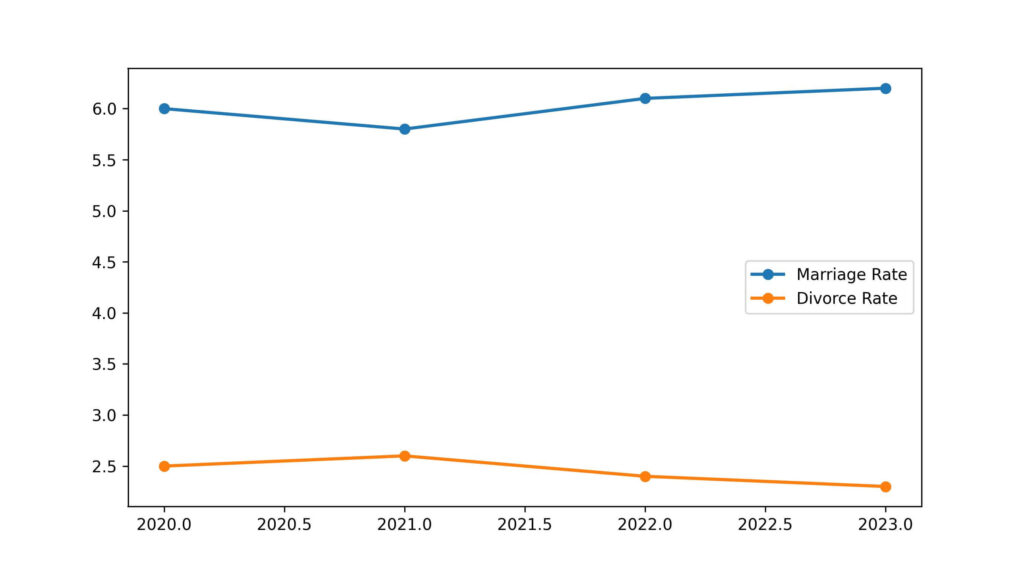
In New Hampshire, the median length of marriage is about 22.6 years, including both ongoing and ended marriages. This places the state among the top three for longest-lasting marriages in the nation. So, New Hampshire couples either really know how to commit—or just don’t like paperwork.
| Age Group (Years) | U.S. Divorce Rate per 1,000 Married Women (2021) | Key National Trend Observations | New Hampshire Overall Divorce Rate (Recent Estimates) |
|---|---|---|---|
| 15-24 | 19.7 | Highest Rate. Divorce is most likely for those who marry young nationally. | 2.6 per 1,000 total population (Crude Rate, 2021) |
| 25-34 | 16.3 | High rate, though declining for younger generations due to later marriage. | 10.3 per 1,000 married women (Refined Rate, 2023) |
| 35-44 | 14.9 | The median duration of first marriages that end in divorce (8 years) often places individuals in this age bracket. | (Among the lowest rates in the U.S.) |
| 45-54 | 14.1 | Rate is stable and lower than younger groups. | |
| 55-64 | 11.8 | Part of the “Gray Divorce” trend; this rate has nearly doubled or tripled since 1990. | |
| 65 and older | 5.5 | Lowest rate, but fastest-growing demographic for divorce since 1990. |
Divorce Rate in New Hampshire in 2025
1. Low Divorce Rate & Long Marriages. New Hampshire consistently has one of the lowest divorce rates in the U.S. Marriages that do end in divorce last a median of over 22 years, longer than the national average.
2. Hybrid Grounds for Divorce. The state allows both no-fault and fault-based divorces. While most cases cite “irreconcilable differences,” a spouse can still claim adultery, extreme cruelty, or two years of abandonment. Apparently, you can choose your preferred drama.
3. No Mandatory Waiting Period. Uncontested divorces can be finalized quickly since there’s generally no required waiting or separation period after filing.
4. Long Residency Requirement. To file, a petitioner must have lived in New Hampshire for at least one year. Because who wouldn’t want a whole year to reconsider?
5. Equitable Distribution Presumes 50/50. Property is divided fairly, not necessarily equally, but New Hampshire presumes a 50/50 split unless convincing the judge otherwise.
6. All Property is on the Table. Courts can divide any property owned by either spouse, including pre-marriage assets, gifts, or inheritances. Yes, bring out everything – even your grandmother’s teapot.
7. Fault Can Affect Financial Outcome. While rarely used to grant a divorce, fault can influence property division or alimony if it caused significant physical, emotional, or economic harm.
Divorce Rate in New Hampshire in 2024
1. Among the Lowest Divorce Rates Nationally. New Hampshire consistently ranks among the U.S. states with the lowest refined divorce rates, estimated at about 10.3 divorces per 1,000 married women – well within the bottom quartile nationally.
2. High Median Household Income. Strong socioeconomic factors, including one of the highest median household incomes and high educational attainment, support marital stability. Because money and degrees obviously make divorce impossible – right?
3. Longest Marital Duration. Marriages that end in divorce in New Hampshire last a median of around 22.6 years, among the longest in the U.S.
4. Long Residency Requirement. Petitioners must have lived in New Hampshire for at least one year before filing – a comparatively long requirement. Plenty of time to rethink that “forever” vow!
5. Hybrid Grounds State. New Hampshire allows both no-fault divorces (“irreconcilable differences”) and fault-based claims, such as adultery, cruelty, abandonment, or habitual intoxication.
6. Equitable Distribution Standard. Property is divided fairly rather than automatically 50/50, considering contributions and circumstances. Yes, even your secret splurges and inherited trinkets might be up for grabs.
7. Fault Can Affect Property. Though rare, fault can influence financial outcomes if it contributed to the loss or diminution of marital assets (e.g., spending marital funds on an affair).
Divorce Rate in New Hampshire in 2023
1. Low Crude Divorce Rate. New Hampshire’s 2023 crude divorce rate was about 2.5 per 1,000 residents, close to the national average, but other metrics place it in the bottom third of states for divorce.
2. Longest-Lasting Marriages. Average marriage duration before divorce is around 22.6 years, among the longest in the U.S. So yes, statistically, couples stick around long enough to argue over the good china.
3. Pure No-Fault is Primary. Most divorces are filed as no-fault, citing “irreconcilable differences” and an irremediable breakdown of the marriage.
4. No Mandatory Waiting Period. There’s no required waiting period; uncontested divorces can be finalized in as little as 1–3 months. Because who needs time to cool off when you can rush a breakup?
5. Fault Still Impacts Financial Outcomes. New Hampshire recognizes nine specific fault grounds (adultery, cruelty, desertion, etc.). Fault can influence alimony or property division if it caused the breakdown of the marriage and substantial suffering or financial loss.
6. Adultery Naming Requirement. If adultery is alleged, the co-respondent must be named and served, adding complexity and cost. Nothing says “fun divorce” like dragging a third party into court.
7. Equitable Distribution Standard. Marital property is divided equitably, not necessarily 50/50. Proven fault can justify an unequal split.