
Mississippi consistently ranks among the states with high divorce rates. The refined divorce rate, measured per 1,000 married women, is about 19.2, placing it in the top five nationwide. The crude divorce rate per 1,000 residents is around 3.3, though reporting can vary. This shows that a significant share of marriages in Mississippi ends in divorce. So, in Mississippi, tying the knot comes with a surprisingly high chance of untying it later.
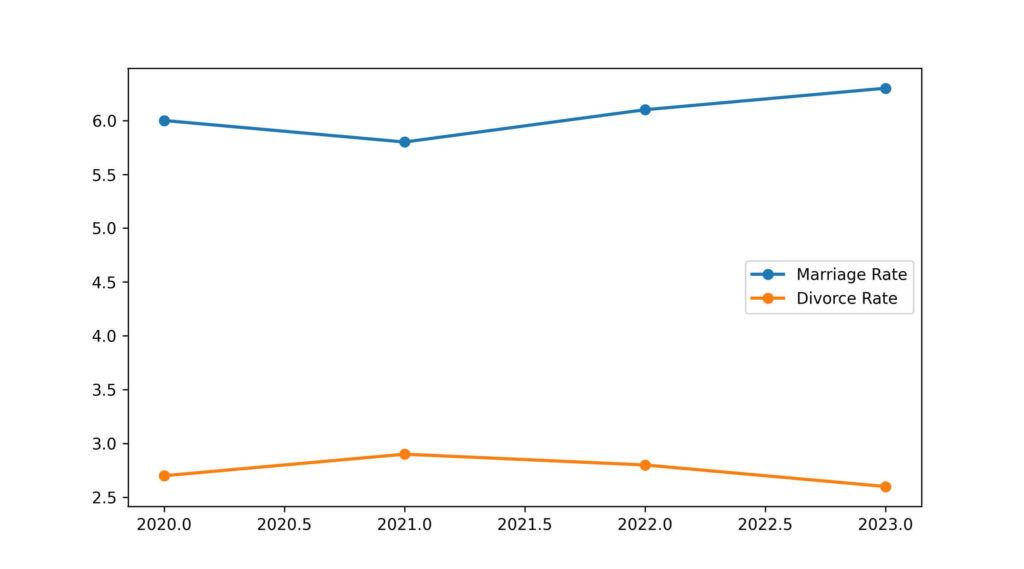
In Mississippi, the average length of marriage is likely shorter than the national median, especially for those that end in divorce. Nationally, first marriages that dissolve last about 8 years, and Mississippi likely falls at or below this mark. So, in Mississippi, “happily ever after” might need a pretty short calendar.
| Age Group (Years) | U.S. Divorce Rate per 1,000 Married Women (2021) | Key National Trend Observations | Mississippi Overall Divorce Rate (Recent Estimates) |
|---|---|---|---|
| 15-24 | 19.7 | Highest Rate. Young age at marriage is the most significant national risk factor. | 3.3 per 1,000 total population (CDC crude rate estimate) |
| 25-34 | 16.3 | High rate, though rates are dropping for this group nationally. | (Consistently one of the highest rates in the U.S.) |
| 35-44 | 14.9 | Marriages that end quickly (within 8 years) often place the individuals in this age bracket for their divorce. | |
| 45-54 | 14.1 | Rate is stable and lower than younger groups. | |
| 55-64 | 11.8 | Part of the “Gray Divorce” trend; the rate for this group has increased significantly over the last few decades. | |
| 65 and older | 5.5 | Lowest rate, but fastest-growing demographic for divorce since 1990. |
Divorce Rate in Mississippi in 2025
- Among the Highest Divorce Rates Nationally. Despite restrictive divorce laws and strong religious affiliation, Mississippi ranks in the top 5–10 states for divorce. The refined divorce rate is around 19.2 per 1,000 married women, well above the national average of 14.2.
- Socioeconomic Factors Drive Divorce. Low median household income and high poverty rates contribute significantly to marital breakdown.
Money problems solve everything – except marriage, apparently. - “Agreement or Fault” Requirement. You can’t get a divorce simply by claiming the marriage is irretrievably broken unless both spouses agree and settle all issues (custody, property, alimony).
- 12 Fault-Based Grounds. If spouses disagree, one must prove one of 12 specific fault grounds, such as adultery, habitual cruelty, desertion for one year, or habitual drunkenness.
Because nothing says “fun” like proving your spouse is guilty of something before you can separate. - Fault-Free Option Requires Full Agreement. No-fault divorce is only available as “Irreconcilable Differences,” and only if both parties agree and submit a signed agreement resolving all disputes.
- 60-Day Mandatory Waiting Period. For no-fault divorces, the complaint must remain on file for at least 60 days before finalization. Fault-based divorces have no mandatory waiting period but usually take longer. Patience is a virtue – especially when your marriage is over but the law says “not yet.”
- Fault Can Affect Alimony. Mississippi uses equitable distribution for property, but fault or marital misconduct can influence alimony amount and duration.
Divorce Rate in Mississippi in 2024
- Among the Highest Refined Divorce Rates. Mississippi ranks in the top three states nationally, with about 19.2 divorces per 1,000 married women, far above the U.S. average of 14.2.
- High Crude Divorce Rate. The crude divorce rate is around 2.9 per 1,000 residents, above the national average of 2.5. Who knew misery loves company in Mississippi?
- Socioeconomic Factors Drive Divorce. Low median household income and financial stress are major contributors to the high divorce rate.
- Hybrid (Fault-First) Divorce System. If spouses disagree, one must prove one of 12 fault grounds (e.g., adultery, cruelty, habitual drunkenness) to obtain a divorce. Nothing says “romance” like filing a 12-point accusation list before splitting up.
- “Irreconcilable Differences” Requires Mutual Agreement. No-fault divorce is only available if both spouses agree; otherwise, fault must be proven.
- Mandatory 60-Day Waiting Period for No-Fault Divorce. Even with mutual agreement, the court requires a 60-day waiting period before finalizing a no-fault divorce. Because waiting two months really helps heal broken hearts.
- New Presumption for 50/50 Child Custody. Effective July 1, 2024, Mississippi presumes equal joint custody is in the child’s best interest, influencing custody negotiations.
- Fault Affects Property Division and Alimony. In contested cases, proving fault can significantly influence alimony awards and equitable property division.
Divorce Rate in Mississippi in 2023
- High Crude Divorce Rate. The crude divorce rate was approximately 2.9 per 1,000 residents, above the national average of 2.5.
- Linked to Low Income .Mississippi’s low median household income (~$48,716) contributes significantly to marital stress and higher divorce rates. Because nothing strengthens a marriage like an empty wallet.
- Long-Term Decline Despite High Rank. The state’s divorce rate dropped about 20% over the previous decade, reflecting a national trend toward fewer divorces.
- Dual-Track System: Fault vs. No-Fault. There are 12 fault-based grounds (e.g., adultery, cruelty, habitual drunkenness) and only one no-fault option. Filing a laundry list of accusations beats just saying “we’re done,” apparently.
- No-Fault Divorce Requires Mutual Agreement. “Irreconcilable Differences” can only be used if both spouses agree on the divorce and either fully settle issues or let the judge decide.
- 60-Day Waiting Period for No-Fault Divorce. No-fault filings require a minimum 60-day waiting period before finalization. Because waiting two months really helps emotions heal.
- No Mandatory Waiting for Fault Divorce. Fault-based divorces have no statutory waiting period, though litigation often takes longer.
- Fault Impacts Property and Alimony. Judges consider marital misconduct when dividing property (Equitable Distribution) and awarding alimony, making fault a key factor in financial outcomes.