
Connecticut’s divorce rate is considered one of the lowest in the nation. Its crude divorce rate is typically 2.6 to 2.8 divorces per 1,000 residents. This level places the state well below the national average. Connecticut consistently ranks among the top five states with the lowest divorce rates. Clearly, nothing strengthens marriage like long winters and even longer commutes.
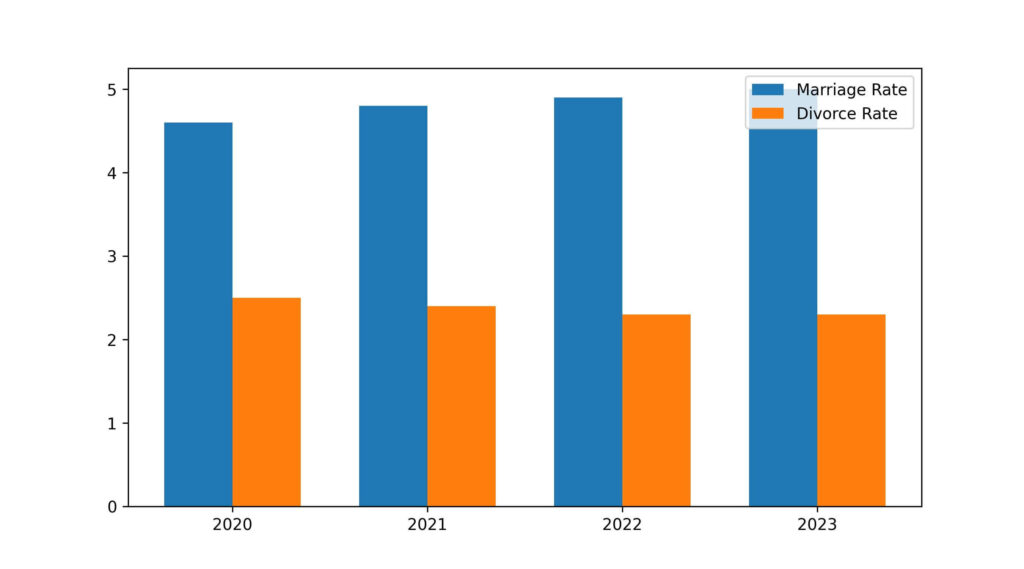
In Connecticut, the average marriage lasts about 20 years, according to Census data. This duration has remained relatively stable over time. Because apparently in Connecticut, couples are committed long enough to celebrate two decades of taxes and home repairs together.
| Age Group | Divorce Rate (Per 1,000 Married Women) | Key Trend |
|---|---|---|
| Ages 15–24 | 17.8 | Highest Rate: Reflects the significant risk associated with marrying young. |
| Ages 25–34 | 17.2 | High Rate: Continues to show a high rate of marital dissolution in early adulthood. |
| Ages 35–44 | 14.5 | Above Average: The rate begins to decline as marriages become more established. |
| Ages 45–54 | 13.5 | Moderate Rate: Represents divorces in middle age, often concerning long-term unions. |
| Ages 55–64 | 11.4 | Moderate Rate: Rate has significantly increased compared to past decades (“gray divorce”). |
| Ages 65 and Older | 5.6 | Lowest Rate: The lowest risk group for divorce, representing marriages that have endured long-term. |
Divorce Rate in Connecticut in 2025
- Historically Low Divorce Rate. Connecticut consistently posts one of the lowest crude divorce rates in the country – about 2.8 divorces per 1,000 residents, below the national average.
- The “Blue State” Effect. Higher income and education levels align Connecticut with national trends showing lower divorce rates in similar states. Shocking that stability and education don’t send marriages crashing, right?
- Longer Marriages Before Divorce. Census data indicates marriages that end in divorce in Connecticut often last around 20 years, suggesting later marriages and longer commitments.
- Divorce Filings Rise in Good Economies. When the economy improves, filings increase because financial stability makes separation more attainable.Turns out people prefer to afford their freedom before choosing it – wild concept.
- Not a Pure No-Fault State. Connecticut offers no-fault divorce but still allows fault-based filings for reasons like adultery, fraudulent contract, or intolerable cruelty.
- Fault Can Affect Money. Courts can consider bad behavior when dividing assets or awarding alimony, giving more to the innocent spouse when misconduct contributed to the breakup. Who knew bad behavior could actually cost something outside of holiday dinners?
- One-Year Residency Requirement. At least one spouse must live in Connecticut for 12 continuous months before filing for divorce.
Divorce Rate in Connecticut in 2024
- Low Refined Divorce Rate. Connecticut reports one of the lowest refined divorce rates in the U.S. – about 10.1 divorces per 1,000 married women, well below the national average of 14.4.
- Low Crude Divorce Rate. The crude divorce rate is around 2.6 divorces per 1,000 residents, slightly lower than the national rate and placing the state near the middle nationally. Apparently, Connecticut couples didn’t get the memo that they’re supposed to be falling apart faster.
- Economy-Driven Filing Patterns. Divorce filings tend to rise during strong economic periods because improved financial stability makes separation more affordable.
- Long-Term Decline in Filings. Divorce filings have dropped roughly 30% over the past two decades, reflecting a steady long-term downward trend. Who knew that fewer breakups over 20 years could still surprise anyone?
- Later Age at Marriage. With first-marriage ages averaging about 32.4 for men and 30.8 for women, Connecticut’s older newlyweds contribute to lower divorce rates.
- Greater Financial Independence for Women. Rising earnings among women make it easier for them to exit unhappy marriages without severe financial strain. Turns out being able to support yourself makes leaving a bad relationship slightly less dramatic – shocking.
- Pure No-Fault Divorce. Connecticut allows divorce solely on the basis of an “irretrievably broken” marriage, with no need to prove fault.
Divorce Rate in Connecticut in 2023
- Among the Lowest Divorce Rates Nationally. Connecticut ranks consistently among the states with the lowest refined divorce rates. In 2023, it recorded about 10.1 divorces per 1,000 married women—well below the national average of 14.4.
- Low Crude Divorce Rate. The state’s crude divorce rate is around 2.6 divorces per 1,000 residents, slightly above the lowest rates but still below the national average. Clearly Connecticut didn’t get the memo that everyone else is breaking up faster.
- Factors Supporting Stability. High education levels and strong socioeconomic conditions contribute to overall marital stability in the state.
- Long-Term Decline in Filings. Divorce filings have fallen sharply – from over 14,500 in 2009–2010 to just 9,698 in 2022–2023. Who would’ve guessed fewer people filing for divorce means… fewer divorces? Revolutionary.
- New Law Simplifying Uncontested Divorces (2023). A 2023 reform allows judges to waive the 90-day waiting period in certain uncontested cases, such as those without children, alimony requests, or shared property.
- No-Fault as the Primary Ground. Connecticut primarily uses no-fault divorce (“irretrievably broken”), with fault-based grounds rarely used due to cost and complexity. Because nothing says “modern romance” like not needing to prove anyone messed up.
- Mandatory 90-Day Waiting Period (Standard Cases). Outside of exceptions, divorcing couples must wait at least 90 days after the return date before the final decree is issued.
- Economy-Driven Filing Patterns. Divorce rates often rise during strong economic periods, when people have the financial stability to afford separation.