
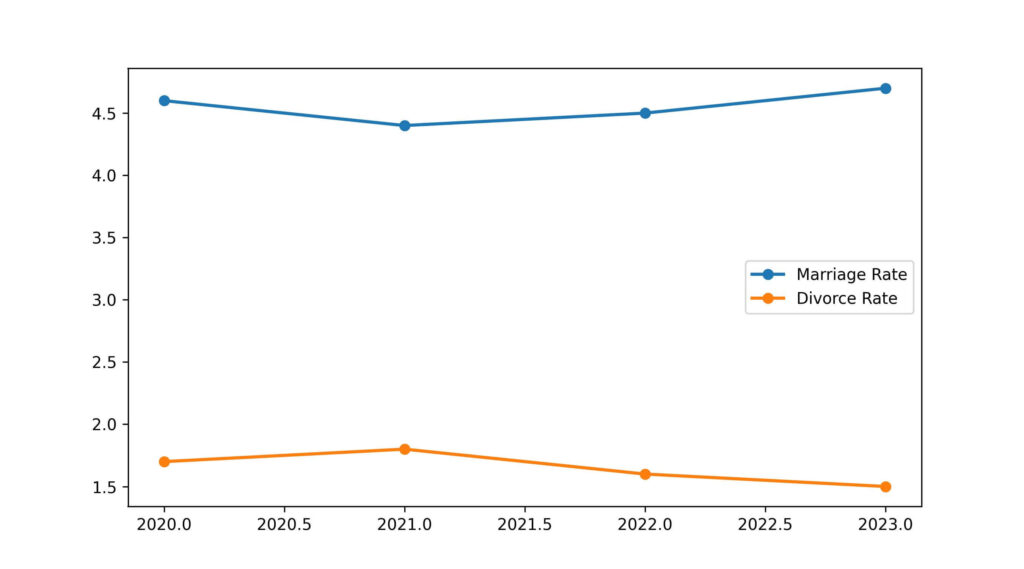
- Crude Divorce Rate: 1.6–1.7 per 1,000 – one of the lowest in the developed world, and still sliding down from its 2.0 peak in 2002.
- Divorces Granted: ~179,000 (2022) – way down from nearly 290,000 in 2002. Slow and steady, Japan-style.
- Estimated Lifetime Divorce Chance: 30–35% – a rough guess since official stats mainly track crude rates.
- Median Age at Divorce (Male): ~50.4 years (2023) – splitting up later in life. Midlife crisis, anyone?
- Median Age at Divorce (Female): ~47.1 years (2023) – also trending older.
- Most Divorces Happen: Within the first 5 years (≈30%) – short-lived marriages strike again.
- Long-Term Divorces (20+ Years): ~20% (2022) – hitting record highs. The so-called “retirement divorce” or “dusk divorce.”
What Percentage of Japan Marriages End in Divorce?
| Statistic | Estimated Value | Context and Interpretation |
|---|---|---|
| Estimated Lifetime Probability | ~33% to 35% | One out of every three marriages in Japan is likely to end in divorce over its lifespan, based on current duration-specific divorce rates. |
| Proportion by Mutual Agreement | ~86% | The vast majority of divorces (Kyogi Rikon) are finalized simply by mutual agreement and registration at a municipal office, showing how easy it is. |
| Divorces after 20+ Years | ~21.5% | The proportion of “Grey Divorces” reached a record high in 2022, highlighting long-term marriage breakdowns. |
| Divorces after Less than 5 Years | ~30% | Short-term marriages (under five years) account for a significant portion of divorces. Quick exits are popular. |
| International Marriages | ~50.5% | Marriages between a Japanese and a non-Japanese spouse have a much higher divorce rate than Japanese-Japanese couples. |
What Is the Average Length of Marriage Before Divorce in the Japan?
Japan’s divorce data doesn’t bother with a single “average” – instead, it shows a clear bimodal pattern. Marriages tend to crash either really early or really late. About 30% of divorces happen within the first five years, usually thanks to incompatibility, immaturity, or financial headaches. The next largest spike isn’t in the middle years, but way later – 20 years or more.
This late-stage divorce trend, sometimes called “retirement divorce” (jukunen rikon), is hitting record highs at over 20% of all divorces in 2022. Couples, often women, are finally cashing out once the kids are grown or the husband retires. It seems enduring a marriage for tradition’s sake is losing its charm, and chasing personal happiness later in life is becoming the new norm.
The median age at divorce backs this up – 50.4 for men and 47.1 for women. In short, Japan’s divorces either happen fast or after decades, with very little in between. Roughly a third of marriages collapse within five years, while long-term unions are increasingly ending on their own terms.
Are Divorce Rates Falling in the Japan? (2022–2025)
Japan’s divorce data doesn’t bother with a single “average” – instead, it shows a clear bimodal pattern. Marriages tend to crash either really early or really late. About 30% of divorces happen within the first five years, usually thanks to incompatibility, immaturity, or financial headaches. The next largest spike isn’t in the middle years, but way later – 20 years or more.
This late-stage divorce trend, sometimes called “retirement divorce” (jukunen rikon), is hitting record highs at over 20% of all divorces in 2022. Couples, often women, are finally cashing out once the kids are grown or the husband retires. It seems enduring a marriage for tradition’s sake is losing its charm, and chasing personal happiness later in life is becoming the new norm.
The median age at divorce backs this up – 50.4 for men and 47.1 for women. In short, Japan’s divorces either happen fast or after decades, with very little in between. Roughly a third of marriages collapse within five years, while long-term unions are increasingly ending on their own terms.
Divorce Statistics for Men vs Women
| Metric | Men | Women | Context and Implication |
|---|---|---|---|
| Median Age at Divorce | ~50.4 years | ~47.1 years | Men are typically about 3.3 years older than women when their marriage ends, consistent with the average age gap at marriage. |
| Highest Age-Specific Rate | Ages 45–49 (Highest official rate) | Ages 40–44 (Highest official rate) | Highlights the high incidence of “Grey Divorce” or late-life marital dissolution in Japan. |
| Peak Divorce Age (Analysis) | Late 30s (Often linked to stress of fatherhood/career peak) | Early 30s (Often linked to strain from childbirth/motherhood) | High-pressure periods in family life act as significant triggers for divorce. |
| Divorce Initiator | Less likely to file the petition | More likely to file the petition | The burden of initiating proceedings often falls disproportionately on women, citing issues like infidelity, domestic violence, or financial strain. |
| Key Trend | Increasing number of “Retirement Divorces” (Divorces after 20+ years) | Increasing push for independence and separate finances post-retirement | Both genders contribute to the rising trend of long-term marriages dissolving. |
Factors Influencing Divorce Rate in Japan
- Legal Ease
- Divorce by Agreement (Kyogi Rikon) handles 85%+ of cases – just sign a form at city hall and you’re done.
- Contested divorces require mediation first – saves money, time, and courtroom drama.
- Stable but Low Divorce Rate
- Japan’s crude divorce rate is lower than most Western countries – yes, people actually stick it out… sometimes.
- Changing Gender Roles
- Rising female independence and shifting societal expectations mean marriages are less about duty and more about satisfaction.
- Individualism on the Rise
- Personal happiness now trumps tradition – divorce isn’t taboo, it’s a choice.
- Late-Life “Retirement Divorce” (Jukunen Rikon)
- Couples are increasingly splitting after decades together – kids gone, retirement hits, midlife crisis upgraded.